
That "New Car" Smell? It's a Chemical Cocktail. Here's What You Can Do About It.

For those of us lucky enough to purchase a new car, there is a definite thrill to sliding in behind the wheel and taking it all in. But when you take a deep breath of that “new car smell”, it isn't a sign of quality. It's chemical off-gassing, and what you're breathing in is a cocktail of volatile organic compounds (VOCs), flame retardants, phthalates, formaldehyde, and potentially PFAS, all releasing from the recently manufactured and installed materials inside your car's cabin.
In a twisted way - and admittedly brilliant way - the auto industry has turned this chemical byproduct into a selling point. One car manufacturer even has a team of certified smellers who evaluate the scent of every vehicle they produce. Another employs scent panelists who rate interior odors by intensity. And dealerships spray synthetic "new car scent" into used cars to recreate the effect. What started as an unavoidable side effect of manufacturing became something we were taught to associate with newness, cleanliness, and value.
Here's what's actually happening.
What's Off-Gassing Inside Your Car
A car interior is made almost entirely of synthetic materials, and every one of them is releasing chemicals into a small, enclosed cabin.
Dashboard, steering wheel, and door panels: are typically made from PVC (polyvinyl chloride) and polyurethane. PVC is softened with phthalates, which are endocrine disruptors. They don't stay locked in the plastic. They migrate out into the air, especially when heated. Phthalates interfere with hormones at very small doses, and because you're constantly re-exposed in the car, your body never fully clears them.
Seat foam is treated with chemical flame retardants to meet the federal laws that were written in the 1970s and not updated since. These flame retardants are linked to cancer, neurological harm, hormone disruption, and reproductive effects.
Carpet and headliner: are bonded with formaldehyde-based adhesives. Formaldehyde is a carcinogen (as deemed by the International Agency for Research on Cancer (IARC)). It causes respiratory irritation and is associated with increased cancer risk at sustained exposure levels.
Fabric and leather treatments: may contain PFAS (per- and polyfluoroalkyl substances) for stain and water resistance. PFAS are known as "forever chemicals" because they don't break down in the environment or in your body. They are linked to thyroid disease, reproductive harm, immune suppression, and certain cancers.
The Research
A 2024 peer-reviewed study from Duke University, published in *Environmental Science & Technology*, tested the cabin air of 101 vehicles (model year 2015 or newer) from across the United States.
The findings:
Flame retardants were detected in the cabin air of every single vehicle tested
Concentrations were 2 to 5 times higher in summer than in winter, confirming that heat dramatically accelerates the release of these chemicals from seat foam into the air
The study confirmed that seat foam is the primary source of flame retardant contamination in cabin air
As lead author of the study noted, the average driver spends about an hour a day in their car. That's roughly 365 hours a year in a small space breathing in chemicals that have been linked to cancer, neurological damage, and hormone disruption.
Beyond flame retardants, multiple studies have measured elevated levels of benzene and formaldehyde in new car cabin air. In some cases, concentrations exceeded national air quality standards set by countries like China and Japan. The United States currently has no cabin air quality standard for passenger vehicles. None.
A parked car in the sun can easily exceed 150 degrees Fahrenheit inside. Heat intensifies off-gassing as it makes every material in the interior release chemicals faster. Then you open the door, sit down, close yourself in, and breathe.
What You Can Do
The good news: there are practical steps you can take to significantly reduce your exposure. This isn't about fear. It's about awareness and making informed choices. Progress, not perfection.
1. The Bake Out

This method uses the accelerated off-gassing that heat creates, to your advantage.
Here's how it works:
Park your car in direct sunlight with all the windows completely closed. Leave it there for all day if possible. The heat will pull chemicals out of the materials faster than they would release under normal conditions.
Then, before you get in, open all the doors and windows and let the cabin air out completely. Give it at least 10 to 15 minutes. You want all that concentrated chemical-laden air to dissipate before you sit in it.
Repeat this as many times as you can during the first few months of ownership. You're intentionally speeding up the off-gassing timeline and flushing the chemicals out of the cabin instead of breathing them in during your commute.
Additional daily habits during the first 6 months:
Open your windows for the first few minutes of every drive, especially in warm weather
Use the fresh air intake setting on your HVAC, not recirculate, at least when you first get in the car. Recirculate keeps the same cabin air cycling through the space. Fresh air mode brings in outside air and pushes contaminated air out
Between drives, park in shade whenever possible to reduce heat buildup
Off-gassing is heaviest in the first 6 months of a vehicle's life. Some research suggests about 80% of VOCs are released in the first 3 months alone. But it can take up to 2 to 3 years for levels to fully stabilize, and hot summer weather can temporarily spike concentrations even in older vehicles.
2. Run an Air Purifier in Your Garage
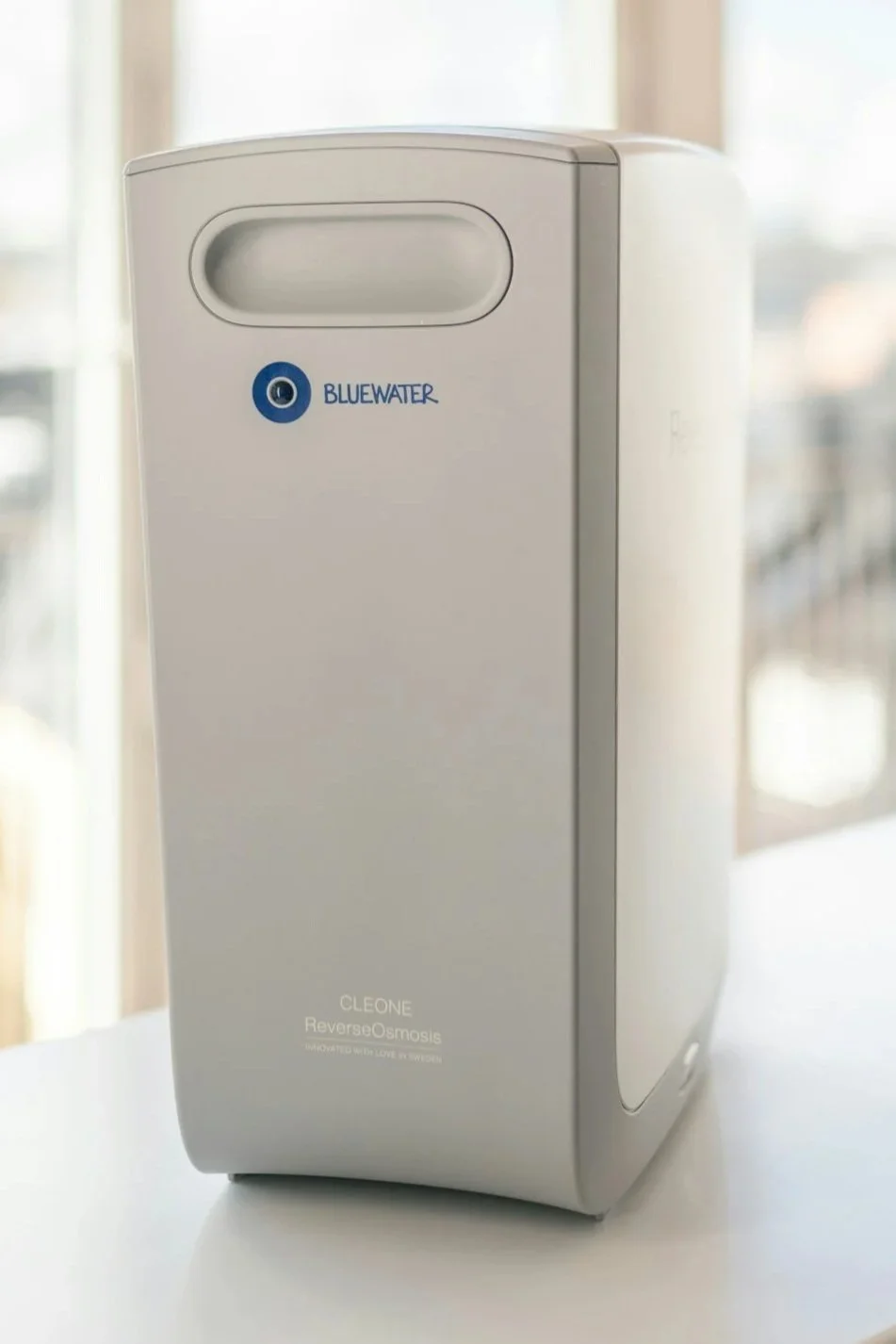
If you have a garage, you can passively clean the cabin air while your car is just sitting there.
Leave the car doors open and run an air purifier nearby. But here's the important detail: it must be an air purifier with an activated carbon filter. Standard HEPA-only purifiers capture particles (dust, pollen, pet dander) but they do not capture VOCs or chemical gases. Activated carbon adsorbs volatile organic compounds, which is what you need to pull off-gassing chemicals out of the air.
Leave this running overnight or while you're at work. It won't eliminate the problem entirely, but it will meaningfully reduce the chemical load in your cabin air between drives.
3. Buy a Retired Dealership Loaner

Want to skip the worst of the off-gassing window entirely? Buy a gently used car that's already done the heavy lifting for you. This is my favorite option and what I do when I need a “new” car.
Dealership loaner and courtesy vehicles are typically only about a year old with low mileage. They've been well maintained and - most importantly for our purposes - they've already gone through the most intense period of off-gassing.
How to find one:
Contact dealerships directly and let them know you're interested in purchasing a retired loaner from their fleet when they rotate vehicles out. Most dealerships cycle their loaner fleet regularly. These cars are often priced below new with remaining manufacturer warranty still intact. Some dealerships will even let you get on a list so they contact you when a vehicle matching your preferences is ready to retire from the fleet.
You get a car that looks and drives like new, with warranty coverage, at a lower price point, and without the chemical exposure that comes with the first year of ownership.
4. Choose Your Brand Carefully
Not all manufacturers are equal when it comes to interior air quality.
Volvo stands out as one of the only major manufacturers voluntarily restricting interior chemicals and actively testing cabin air quality. They use vegetable-tanned leather instead of chromium-tanned, test interior metal components for contact allergies, source materials with strict limits on VOC emissions, and run their vehicles through sun simulator tests that heat the interior to 149 degrees Fahrenheit to measure total VOC and formaldehyde output.
The broader auto industry, however, is significantly behind. There is no widely adopted third-party certification for vehicle cabin air quality.
If you're in the market for a new car and chemical exposure is a concern, research the specific manufacturer's approach to interior materials. Ask questions. Look for brands that are transparent about what's in their interiors and what they're doing to reduce chemical emissions.
A Note for Parents

If you have a car seat in your vehicle for a baby or young child, everything above applies with even more urgency. Children breathe faster than adults relative to their body weight, which means they take in a higher dose of airborne chemicals. Their developing systems are also more vulnerable to the effects of endocrine disruptors, neurotoxins, and carcinogens.
The bake out method, ventilation habits, and fresh air intake setting are especially important when a child is regularly riding in the car. And if you're buying a new car seat, look for options that are flame retardant free and PFAS free.
The Bottom Line
That new car smell fades because the chemicals creating it are dispersing into the air you breathe. The goal is to let them disperse somewhere other than your lungs.
You don't need to avoid buying a new car. But you should go in with your eyes open, take simple steps to mitigate your exposure, and know that the choices you make in the first few months of ownership can meaningfully change how much of that chemical cocktail ends up in your body.
If you have questions about reducing chemical exposures in your car, your home, or anywhere else your family spends time, that's what I do. Reach out anytime.
Sources
Tokumura et al. (2016), VOCs and aldehydes in Japanese car cabins, AIMS Environmental Science: http://www.aimspress.com/article/10.3934/environsci.2016.3.362
Faber et al. (2017), "Air quality inside passenger cars," AIMS Environmental Science 4(1): 112-133: https://www.aimspress.com/fileOther/PDF/environmental/environsci-04-00112.pdf
Tolis et al. (2023), "Concentrations of volatile organic compounds in vehicular cabin air," Environmental Pollution: https://www.sciencedirect.com/science/article/abs/pii/S0269749123007650
Fedoruk & Kerger (2003), VOC measurement in automobiles; Published in Journal of Exposure Science & Environmental Epidemiology (Nature): https://www.nature.com/articles/7500250