
Hormone-Disrupting Chemicals Are in More Products Than You Think.
Learn the top 5 product swaps to boost your fertility by eliminating toxins hiding in plain sight.
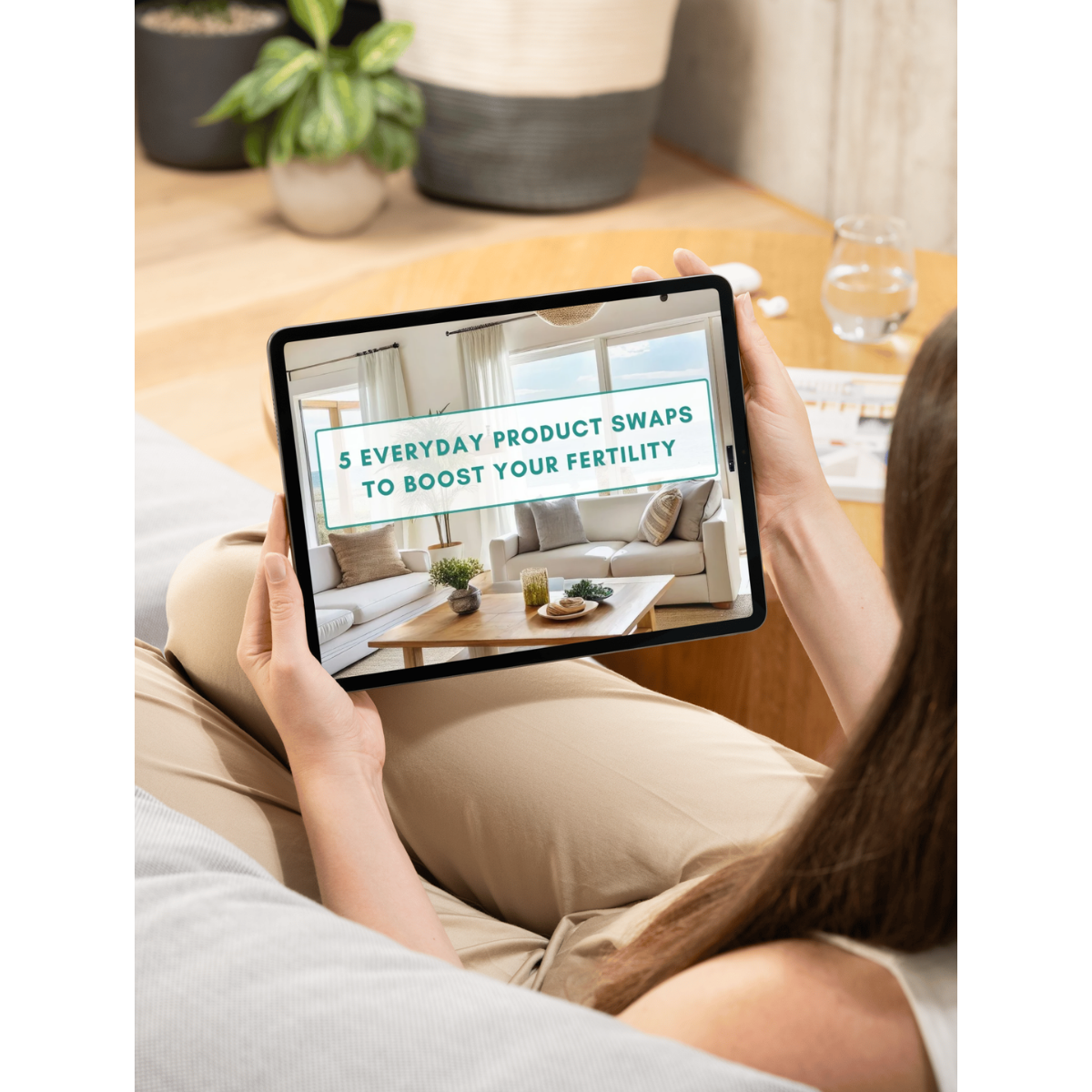

Research links chemicals found in everyday household products to hormone disruption, cycle irregularities, and fertility challenges. These are not exotic substances. They are in cookware, personal care products, cleaning supplies, and food storage. This guide tells you which ones matter most and where to start.
→ Know which chemicals are most likely to affect your hormones and where they are actually hiding in your home.
→ Stop wasting time on research that goes nowhere and start with the swaps that make a real difference.
→ Feel confident that what surrounds you every day is supporting your body, not working against it.
→ Cut through greenwashing without having to become a toxicologist.

You Have Already Put in the Research. It Has Not Made Things Clearer.
You read the blogs. Checked the apps. Went down the ingredient rabbit holes.
And came out more confused than when you started.
One source says an ingredient is fine. Another calls it a hormone disruptor. A brand markets itself as clean — then you read the fine print.
This is not a failure of effort.
"Natural," "non-toxic," and "clean" are not regulated terms. Any brand can put them on a label. And most of the wellness content you find online comes from people with financial relationships to the products they are recommending.
If you are someone who wants to get this right before starting a family, but this confusion is exhausting. You care. That is exactly why the lack of clear answers hurts.

There Is a Clear Starting Point.
This Guide Is It.

The goal is not perfection. It is meaningful reduction — starting with the exposures most likely to affect your hormones, in the places you spend the most time.
The chemicals most linked to fertility disruption are not exotic. Endocrine disruptors are hiding in ordinary products.
They interfere with how your hormones function. Research has connected them to cycle irregularities, implantation challenges, and other fertility concerns.
You do not need to become a toxicologist. You need to know which product categories carry the highest risk and which swaps are worth making first.
That is exactly what this guide covers.
What Is Inside the Guide?
✓ The specific household items most linked to hormone disruption and fertility challenges
✓ Which rooms and product categories carry the highest risk so you know exactly where to focus first
✓ Practical, prioritized swaps you can make without replacing everything at once
Meet Karen Bloom

A note on who wrote it: Karen Bloom, Juris Doctor (J.D.) is a consumer protection attorney who spent years on legal teams holding corporations accountable for products with undisclosed harmful chemicals, including cases against DuPont for Teflon and baby bottle manufacturers for BPA.
She has no brand affiliations, no sponsorships, and no affiliate relationships.
Every recommendation is based on research and personal vetting.
Nothing else.
What it Feels Like When You Finally have a Resource you can Trust
From exhausted and confused to easy and stress-free!
“Before finding Natural Haven, I found many 'nontoxic' brands were greenwashed and full of chemicals, leaving me exhausted and confused. Karen has helped us make safer choices, saving me time and improving our health. She makes the transition to non-toxic living easy and stress-free.”
Alondra S.
Especially grateful while starting to plan for a family
“Karen really helped me when I was trying to ditch all my toxic houseware. After dealing with some health issues I really wanted to make sure I was confident in the legitimacy of products I would be investing in. I feel especially grateful as I'm starting to plan for a family."
Brooke H.
Who This Is For

This guide is for you if you are preparing to conceive, currently trying to conceive, or simply want your home environment to support your hormone health. It is especially useful if you have been doing your own research and keep running into contradictory information or greenwashed products.
This guide is not for you if you are looking for a quick fix or a guarantee. Reducing toxic exposure is one part of a broader picture. This guide will not promise outcomes. It will give you clear, evidence-based information and a practical starting point.
Where You’ve Seen Natural Haven…







You Do Not Have to Do Everything at Once

You do not have to throw out everything you own.
You do not have to hit some impossible standard before your body will respond. That is not how this works, and it is not what this guide will tell you to do.
What research shows is that meaningful reduction matters.
Less exposure, starting with the highest-risk sources, is enough to make a real difference.
Every swap counts. Every small change is a real change.
You are probably further along than you think. If you have been reading labels and asking questions, you are already ahead of most people.
This guide meets you exactly where you are.
No fear. No pressure. No panic-inducing urgency designed to make you overhaul your life overnight. Just clear information and a practical place to start.